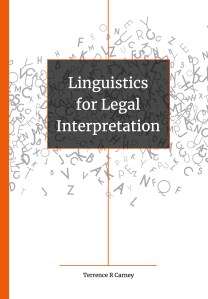
The book ‘Linguistics for legal interpretation‘ by Terrence R Carney has just been published by the University of Johannesburg Press. It is available in open access format.
I have reported previously on Terrence Carney’s excellent work, which is not only groundbreaking but also always presented in a clearly understandable way – a rare gift. As you will no doubt see – upon opening this book you will start reading and not put it down!
The author notes that the purpose of the book is “the provision of a linguistic toolbox”. Referencing Roger Shuy he points out that “legal scholars and practitioners are not always aware of or familiar with linguistics and how it can help them resolve legal disputes”.
 The 36th AUSIT National Conference on the theme: ‘Building bridges, strengthening alliances: Translation and interpreting in today’s connected world‘ will take place from 23 to 25 November 2023 at the University of New South Wales, Sydney, Australia.
 This gem is from a faithful reader of this blog…
 The freely downloadable publication ‘A history of translation at the European Commission‘ describes eight decades of fundamental work.
 Alabama, in the United States, “recently eliminated a long-standing gap in its legal and statutory framework”¹ by designating an official State cookie.
  A really interesting call for papers by the editorial committee of
 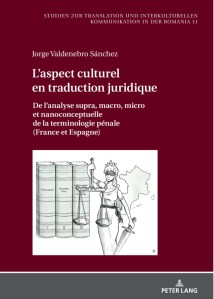 ‘De l’analyse supra, macro, micro et nanoconceptuelle de la terminologie pénale (France et Espagne)‘ by Jorge Valdenebro Sánchez has been published by Peter Lang as both an ebook and bound copy.
 Lots of translators spend significant amounts of time at home. So we can have all the more positive effect on the environment by making tweaks to our daily routine.
 Translating and interpreting the law takes many forms. A recent judgment of the King’s Bench for Saskatchewan 😊 involved the interpretation of emojis. It found that the use of a thumbs-up emoji was sufficient to form a contract. So where is my Monday smile, I hear you ask.
  From Words to Deeds: translation & the law
You must be logged in to post a comment.