In connection with a recent Law Library of Congress event which I hope to report on more fully soon, the Library has released an excellent new publication in PDF form,  Translation of National Legislation into English (click on the title to download). This guide, prepared by the staff of the Law Library’s Global Legal Research Center, is a reference tool for locating translated materials from thirteen nations: Afghanistan, Argentina, Brazil, China, France, Germany, Greece, Israel, Italy, Japan, Lebanon, Mexico, and the Russian Federation; international organizations; and international courts and tribunals .
Yearly Archives: 2012
Chief Justice cannot believe his ears
 This almost qualifies as a ‘Monday smiles‘ post, but sadly for Italians or anyone involved with or affected by the Italian legal system, it isn’t a joke.
Here are a few quotes from a Reuters news feed a few days ago. There is a link to the full article at the end of this post if you want to find out more. The bold emphasis is mine.
Extensive collection of resources on international trade
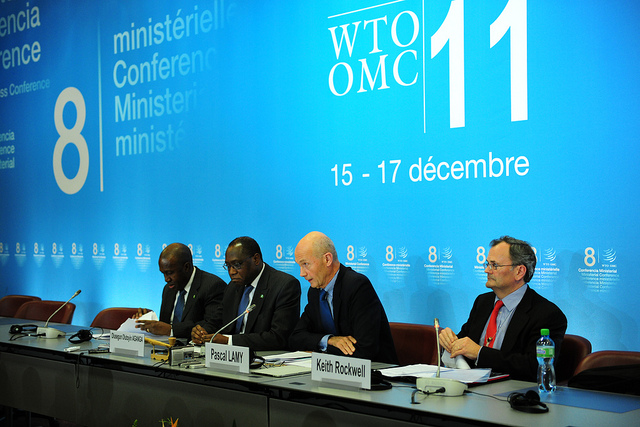 Today I would like to share with you a great resource on international trade (only available in English, Spanish and French at present – sorry to the rest of you) called Juris International.
It is the result of a partnership between the International Trade Centre, the Center for Research in Public Law at the University of Montreal, Canada, and Juripole from the University of Nancy, France.
Easter Monday smiles – English beaches are grassy green
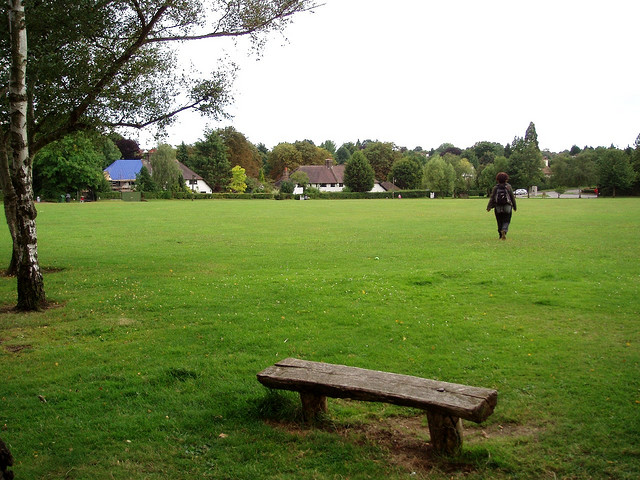 A High Court ruling has confirmed that some beaches can be registered as ‘village greens’. No, this isn’t a late April Fool. Great, isn’t it!!
Mr Justice Ouseley, in a judgment of 21 March last, stated “I can see no answer to the contention that the ordinary meaning of the words used by Parliament to define “town or village green” are broad enough to permit the registration of a tidal beach, provided that the nature, quality and duration of the recreational user satisfies the statutory test.”
Britain’s ancient statute book
 This week a report produced jointly by the Law Commission for England & Wales (LCEW) and the Scottish Law Commission recommends repealing more than 800 pieces of legislation dating from the 14th century onwards in order, according to LCEW chairman Sir James Munby, “to simplify and modernise our law, making it more intelligible. It saves time and costs for lawyers and others who need to know what the law actually is, and makes it easier for citizens to access justice. We are committed to ridding the statute book of meaningless provisions from days gone by and making sure our laws are relevant to the modern world.”
Here’s where the fun starts, though – some of those laws include:
WordstoDeeds update
 This post is just to let you know about a few small changes around here.
First of all, the blog’s banner name has switched around – as you can see at the top of the page. It seems to fit in better with how people refer to the blog and with the URL (thanks Ken). I hope you agree!
 Second, I have now created a Scoop.it topic for articles that might be of interest to readers of this blog, relating to legal translation. You can find it here: http://www.scoop.it/t/legal-translation. It won’t be updated every day, just when I find news items that I think are relevant.
For those who might not have discovered it yet, Scoop.it enables anyone to quickly and easily create a sort of personalized magazine.
The articles will not overlap with blog posts, but hopefully be a complement to the blog for those who are interested.
 Lastly, I’m sure most people know about the Twitter feed, but just in case: http://twitter.com/#!/wordstodeeds. I tend to tweet small useful bits of information I come across, and new posts from this blog are automatically tweeted too.
Monday smiles – The sky is blue
 Well, for those of us in the northern hemisphere, Spring certainly seems to have sprung.
In keeping with these lovely weather conditions, I offer you this classic text by Daniel R. White, from his book Trials and Tribulations, Appealing Legal Humor. I just love it.
Click here to access a PDF on the publisher’s website. You may like the ‘Principles of Legal Writing’ on the third page too.
Enjoy!
Find significant cases more quickly using Google Scholar
 As you may know, Google Scholar allows you to search for US legal opinions (as well as patents and international journal articles).
Recently, the presentation of search results has been changed to show the extent of discussion of cited cases.
Whilst translators can use this to collect relevant reference documents, lawyers may use it to evaluate the weight of the adverse party’s arguments.
New web-radio programme by the French Ministry of Justice
 Earlier this month, the French Ministry of Justice launched a new series called Femmes de droit through their website. The first woman to be interviewed was Sylvie Monjean-Decaudin, a legal translator of Spanish to French and university professor teaching international commercial law and trade in Spain and Latin America to linguists, as well as legal translation, at Cergy-Pontoise near Paris.
You can listen to the interview (in French) here, and also download a transcript if you prefer to read it.
Monjean-Decaudin was also a speaker at a conference on legal translation held in Lyon in 2010, the video proceedings of which (in French) can be accessed here.
The Ministry website also offers a wide selection of profiles of individuals in the French legal system, from judges to clerks, that you can access here.
What exactly is a lawyer-linguist?
 This post is the second in a series I have called “What exactly is…”, the first of which examined the burgeoning subject of forensic linguistics.
The topic of lawyer-linguists has been interesting me for quite some time now, and popped up again recently on Twitter with a flurry of job offers from the European Central Bank for several languages.
Although this job title seems to be relatively new, you can see a very early lawyer-linguist on the right – Cicero…
 From Words to Deeds: translation & the law
You must be logged in to post a comment.