Coffee break training

OK, so maybe your daily coffee doesn’t look like the coffee in the picture, but we can all dream, can’t we?

Today’s post is about a great idea from the UK – to provide software training in tiny bite-sized chunks. Their slogan is “IT training, one cup at a time”.

Coffee Break Training have a YouTube channel where they kindly offer some free video tutorials on Microsoft Office products. In their instructor-led sessions delivered by webinar, you can choose half-hour slots when it suits you, and the prices are very reasonable indeed (I have no vested interest in this!).


Multilingual semantic map on steroids

A few weeks ago, I told you about a dictionary on steroids (see here). Today’s post is about a multilingual semantic map and thesaurus on steroids! It’s called the Sketch Engine. At present it can be used in 42 languages.

The Sketch Engine is an awesome tool. It is extremely useful for everyone who manipulates words and needs ideas.

Here are just a few examples of how it can be used:
– To create brand names: The Most Powerful Naming Tool I’ve Ever Used
– To help translators looking for collocations (the words that ‘sound right’ together)
– To give inspiration to lawyers when wording their pleadings
– To help academics when writing papers or theses
– To help journalists and authors get around ‘writer’s block’
– For non-native speakers of a language to check which words are used together and how

Continue reading

Legal Language Explorer

The Google N-grams tool (see my recent post and update) has now fostered a new application to search 200 years of US Supreme Court decisions: Legal Language Explorer. It has been developed by Professor Dr. Daniel Martin Katz of Michigan State University College of Law, Michael J. Bommarito II of Computational Legal Studies, and their colleagues.

The tool is lightning fast, and I really like the way that the corpus tool allows you to click through to list of cases and then to see the original text, and to export lists to Excel, for example. I also support the move, of which the authors are part, to make more full-text legal resources openly available to the public.

Click here to see a presentation of the service, given at the conference JURIX 2011 in mid-December. Bommarito has also posted a more technical description of the project on his blog.

You can try out the web-based interface here. Let me know what you think!

Thanks to Rob L. indirectly via Australia, and Robert at Legal Informatics Blog for bringing the project to my attention.

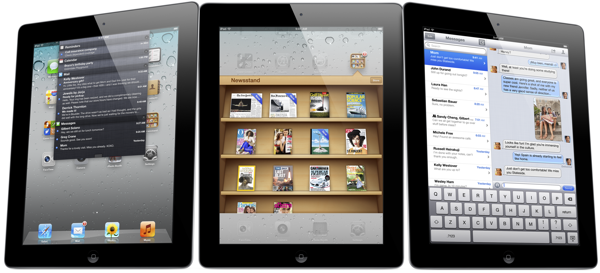
A selection of useful iPad apps

The rise of iPad adoption by legal professionals (see this article and this survey) is largely because it is so light and easy to carry around. The tablet can also be a useful way for translators to store and access a wide selection of documentary resources, including (heavy!) dictionaries offline wherever they are. In the academic world, uptake seems more limited for the moment, but there is a wealth of tools that researchers could take advantage of, as you will see below.

Hopefully this post will give you a few new ideas. I have included only those apps that I find really useful, but of course there are many more, including in other languages. Do share your favourites with us by adding a comment below this post or sending me an email. Continue reading

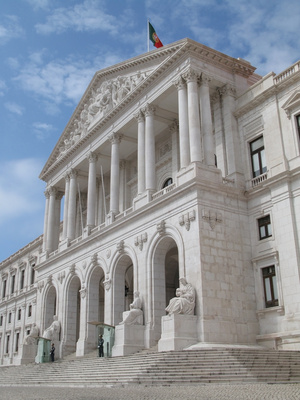
Trilingual termbase for the Portuguese Parliament

The Textual and Terminological Database for the Portuguese Parliament [BDTT-AR] is the result of a collaboration between the Portuguese Parliament (Assembleia da República) and the Centro de Linguística da Universidade Nova de Lisboa. I was introduced to this project by Rute Costa, Raquel Silva and Zara Soares de Almeida during their excellent presentation at a recent conference.

BDTT-AR is a multilingual database (Portuguese, English and French) that contains terms used within the Portuguese Parliament. Terminological information has been retrieved from texts produced within this institution, and thoroughly checked with the different working groups involved – linguists, terminologists, translators, documentalists and specialists from the different Parliament areas.
The BDTT-AR is conceived as a continuously updated dynamic database.

For me, the groundbreaking feature of this project is the collaboration between all of the above professional and multidisciplinary groups, as well as the fact that this precious resource has been made freely available. Let us hope that it will be used a model for similar future initiatives based upon cooperation.

OECD glossaries

For international lawyers and translators alike, the Organisation for Economic Co-operation and Development (OECD) publishes a number of comprehensive glossaries, some of which are bilingual or multilingual. I find the Corruption and Economics glossaries particularly useful. They are available as a print version, but can also be purchased in PDF format allowing them to be easily and quickly searched. Many can also be accessed through your browser.

Other subjects include, inter alia, fisheries, transport, insurance, environmental enforcement, statistics and compliance. Definitions are derived from international guidelines and standards.

http://www.oecd-ilibrary.org/glossaries

New access to supreme court rulings in French

The Juricaf database has been freely accessible to the public since October this year, and includes almost 800,000 supreme court rulings from forty French-speaking countries, including OHADA countries as well as France, Switzerland, Canada and Belgium.

I love the clear and efficient interface too.
http://www.juricaf.org/

The project is a joint initiative of AHJUCAF, the Association of francophone supreme courts (50 members), and the Laboratoire Normologie Linguistique et Informatique du droit at the Sorbonne University in Paris. It is supported by the Organisation internationale de la francophonie and other organizations promoting the French language.

In the mid-term there is a plan to produce multilingual thesauri, in particular to assist legal professionals from common law jurisdictions, which sounds very interesting indeed.

My thanks go to Library Boy, an Ottawa law librarian’s blog, and the excellent Legal Informatics Blog for their posts on the Juricaf database. This post is by kind permission of AHJUCAF.

Play with words and do some good in the world

“What if just knowing what a word meant could help feed hungry people around the world? Well, at FreeRice it does . . . the totals have grown exponentially.” (The Washington Post).

FreeRice is a non-profit website run by the United Nations World Food Programme.
FreeRice has two goals:
– Provide education to everyone for free.
– Help end world hunger by providing rice to hungry people for free.

English, German, Spanish, Italian and French are available, as well as some general knowledge subjects.

The site provides this great short video to introduce the site to new players: “Why is that important? Because the more people who play, the more rice we raise and the more people we can help. So far, we have raised enough to feed almost 5 million people.
The power of FreeRice lies in everyone doing our small part. So please share this video with friends and family, and let’s rice up against hunger!

Update on N-grams

For those who were interested in yesterday’s post, this dynamic presentation by two Harvard researchers offers a further insight into the subject (and a few smiles too): What we learned from 5 million books

The video is part of the TED project, “a community welcoming people from every discipline and culture who seek a deeper understanding of the world“. The website has a mine of interesting videos, and many have been subtitled as part of the Open Translation Project – a fascinating way to gain experience for new translators.

You may also be interested in the original post here.