To all readers worldwide, whether you are celebrating, working, or resting, my very best wishes. And thoughts for all those who are just ‘surviving’.

To all readers worldwide, whether you are celebrating, working, or resting, my very best wishes. And thoughts for all those who are just ‘surviving’.
A seasonal Monday smile to start your week…

Ceiling, Reales Alcázares de Sevilla
The Universidad Pablo de Olavide in Seville, Spain is organizing a symposium entitled “From Legal Translation to Jurilinguistics: Interdisciplinary Approaches to the Study of Language and Law“, to be held at on 27-28 October 2016.
 Lord Neuberger, President of the UK Supreme Court, recently gave a speech on science and law at the Royal Society in London. He considered the different ways in which lawyers and scientists reason as well as the use of science in the courtroom.
 Strictly speaking not a Monday smile, but for me the idea conjures up wonderful imagery! 🙂
So… this is actually a Term Focus post, on the practice of Hot Tubbing.
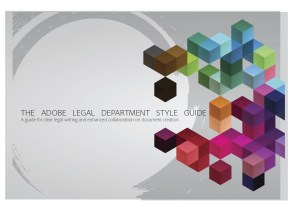 The legal team at Adobe has developed The Adobe Legal Department Style Guide, which is made available free of charge under a Creative Commons license.
 VALTER is a multilingual termbank containing glossaries compiled by the Finnish Prime Minister’s Office and other Government agencies. Languages include, depending on the glossary, Finnish, Swedish, English, Russian, French, German, Sami, Estonian, Italian, Portuguese, Spanish…
 The World Intellectual Property Organization’s WIPO Pearl terminology database was updated two months ago with 5,000 new terms, 500 new concepts, and 1,000 new concept relations.
The database now contains over 105,000 terms in 10 languages, and 16,000 concepts, all entered and validated by WIPO language experts (translators and terminologists).
 The French Government has just published a Guide pratique pour une communication publique sans stéréotype de sexe. It has been produced by the Haut conseil à l’égalité entre les femmes et les hommes (HCEfh).
The 36-page guide gives a summary of relevant European and national legislation and guidelines on the subject, briefly addresses arguments against the feminisation of terms, and then shows how to apply the guidelines, together with further references. There are also a number of “right & wrong” examples.
A useful grammar key, “exemples de féminins et masculins selon les terminaisons“, ends the publication.
 A little breakfast fun to start the week…
 From Words to Deeds: translation & the law
You must be logged in to post a comment.