Multilingual semantic map on steroids

A few weeks ago, I told you about a dictionary on steroids (see here). Today’s post is about a multilingual semantic map and thesaurus on steroids! It’s called the Sketch Engine. At present it can be used in 42 languages.

The Sketch Engine is an awesome tool. It is extremely useful for everyone who manipulates words and needs ideas.

Here are just a few examples of how it can be used:
– To create brand names: The Most Powerful Naming Tool I’ve Ever Used
– To help translators looking for collocations (the words that ‘sound right’ together)
– To give inspiration to lawyers when wording their pleadings
– To help academics when writing papers or theses
– To help journalists and authors get around ‘writer’s block’
– For non-native speakers of a language to check which words are used together and how

Continue reading

Legal Language Explorer

The Google N-grams tool (see my recent post and update) has now fostered a new application to search 200 years of US Supreme Court decisions: Legal Language Explorer. It has been developed by Professor Dr. Daniel Martin Katz of Michigan State University College of Law, Michael J. Bommarito II of Computational Legal Studies, and their colleagues.

The tool is lightning fast, and I really like the way that the corpus tool allows you to click through to list of cases and then to see the original text, and to export lists to Excel, for example. I also support the move, of which the authors are part, to make more full-text legal resources openly available to the public.

Click here to see a presentation of the service, given at the conference JURIX 2011 in mid-December. Bommarito has also posted a more technical description of the project on his blog.

You can try out the web-based interface here. Let me know what you think!

Thanks to Rob L. indirectly via Australia, and Robert at Legal Informatics Blog for bringing the project to my attention.

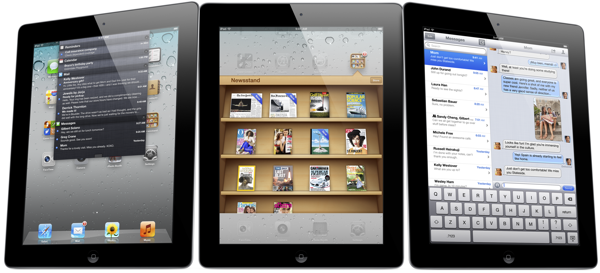
A selection of useful iPad apps

The rise of iPad adoption by legal professionals (see this article and this survey) is largely because it is so light and easy to carry around. The tablet can also be a useful way for translators to store and access a wide selection of documentary resources, including (heavy!) dictionaries offline wherever they are. In the academic world, uptake seems more limited for the moment, but there is a wealth of tools that researchers could take advantage of, as you will see below.

Hopefully this post will give you a few new ideas. I have included only those apps that I find really useful, but of course there are many more, including in other languages. Do share your favourites with us by adding a comment below this post or sending me an email. Continue reading

World’s first Twitter moot

On Tuesday, February 21st, 2012, at 10am PST (1 pm EST), the non-profit organization West Coast Environmental Law in Canada will be hosting the world’s first ever Moot Court to be held on the popular social media platform, Twitter.

Three judges and teams from five law schools across Canada will make social media and legal history, participating in a mock appeal of a recent precedent-setting environmental case, with the teams and judges all participating via Twitter. (Thanks to Library Boy for bringing this event to my attention).

Click here to go to the moot website

How you can participate…

Continue reading

Conference – ‘Those Who Can, Teach’: Translation, Interpreting and Training

Saturday 10 November 2012
(date changed from Saturday 3 November)
University of Portsmouth, UK

These are challenging times for translator and interpreter training. The past 40 years have seen big changes in translator training with a shift towards greater professionalization, an explosion in the number of courses, and also a shift towards lifelong learning and continuing professional development. Translator training has also moved, in part, out of the seminar room into the virtual teaching environment. The industry and student professional needs are also changing very fast. Continue reading

Season’s Greetings

Dear Readers,

I would like to take this opportunity to wish you all a relaxing and enjoyable festive period, whether you are in a part of the world where the weather is chilly, or whether you will be basking on the beach.

You might also enjoy this politically correct festive greeting  – in language that those working in the legal world will fully understand…

I am truly delighted to report that this 3-month-old blog is attracting much interest and lots of people are signing up to receive posts.  It is great to know that someone out there wants to read what I am publishing!

Please do send me your ideas or requests for items that you would like to see included next year, either by email or in a comment below, and I will do my best to incorporate them.

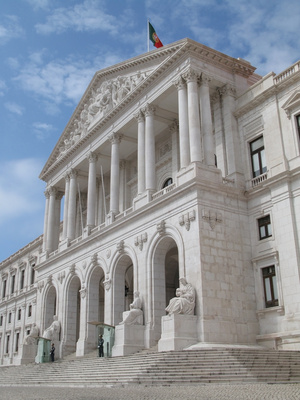
Trilingual termbase for the Portuguese Parliament

The Textual and Terminological Database for the Portuguese Parliament [BDTT-AR] is the result of a collaboration between the Portuguese Parliament (Assembleia da República) and the Centro de Linguística da Universidade Nova de Lisboa. I was introduced to this project by Rute Costa, Raquel Silva and Zara Soares de Almeida during their excellent presentation at a recent conference.

BDTT-AR is a multilingual database (Portuguese, English and French) that contains terms used within the Portuguese Parliament. Terminological information has been retrieved from texts produced within this institution, and thoroughly checked with the different working groups involved – linguists, terminologists, translators, documentalists and specialists from the different Parliament areas.
The BDTT-AR is conceived as a continuously updated dynamic database.

For me, the groundbreaking feature of this project is the collaboration between all of the above professional and multidisciplinary groups, as well as the fact that this precious resource has been made freely available. Let us hope that it will be used a model for similar future initiatives based upon cooperation.