Lawyers’ flash mob in green t-shirts

To celebrate the 30th anniversary of the Canadian Charter of Rights and Freedoms a couple of weeks ago, lawyers and other members of the legal community in Ottawa organized a flash mob and danced a choreographed piece wearing bright green t-shirts.

Other flash mobs were organized all over Canada by the Canadian Bar Association. If you want to learn the dance routine, click and enjoy. 🙂

You can read more about the event here.

Who says the legal profession is stuffy?

.

By the way, here is the Wordnik definition of ‘flash mob’, just in case you need it: http://www.wordnik.com/words/flashmob
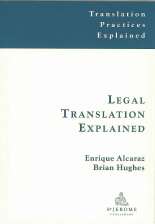
Legal Translation Explained

A few days ago I realized that I hadn’t included a book review for quite a while. Although this book was published in 2002, it is still really useful, and as far as I can tell, about the only one on the market to be such a comprehensive theoretical reference whilst being totally accessible and clearly written. When I read it, I gobbled it down in just a couple of days. It covers English, Spanish, French and German, but would probably also be of use to people working from other languages into English.

This is what the publisher, St Jerome, has to say: “The scope of the book makes it useful not only for would-be translators, but also as a reference source to anyone with a background in any of the languages used in the book, who would find the explanations and glossed terminology an aid to becoming familiar with the English legal system and vocabulary. It could also serve as a basic introductory text to anyone with an interest in legal English. (Lucy Cox, International Journal of Legal Information)

Here is a link to the publisher’s contents page so you can see whether it might be of use to you.

‘Business-ese’ may be worse than legalese

I don’t fully agree with plain language campaigns as regards legal documents – I guess I go along with those who say that the law has to be precise enough and should be interpreted by experts – i.e. lawyers and the judiciary rather than non-specialists – but I certainly think that a lot can be (and is being) done to make legal language more accessible where possible.

Continue reading

Compendium of legal translation degrees offered by universities

In this post, I hope to give you some examples of the legal translation and interpreting degrees available. Please do write in if you know of others that I haven’t included here.

Most are on-site courses, but a number involve distance learning to varying extents.

The information below has been taken from the relevant university websites and direct correspondence. If any details are incorrect, I would be happy to change them upon request from the institution concerned.

I have listed the courses in alphabetical order of their location.

Continue reading

Translation of national legislation

In connection with a recent Law Library of Congress event which I hope to report on more fully soon, the Library has released an excellent new publication in PDF form, Translation of National Legislation into English (click on the title to download). This guide, prepared by the staff of the Law Library’s Global Legal Research Center, is a reference tool for locating translated materials from thirteen nations: Afghanistan, Argentina, Brazil, China, France, Germany, Greece, Israel, Italy, Japan, Lebanon, Mexico, and the Russian Federation; international organizations; and international courts and tribunals .

Continue reading

Extensive collection of resources on international trade

Today I would like to share with you a great resource on international trade (only available in English, Spanish and French at present – sorry to the rest of you) called Juris International.

It is the result of a partnership between the International Trade Centre, the Center for Research in Public Law at the University of Montreal, Canada, and Juripole from the University of Nancy, France.

Continue reading

Easter Monday smiles – English beaches are grassy green

A High Court ruling has confirmed that some beaches can be registered as ‘village greens’. No, this isn’t a late April Fool. Great, isn’t it!!

Mr Justice Ouseley, in a judgment of 21 March last, stated “I can see no answer to the contention that the ordinary meaning of the words used by Parliament to define “town or village green” are broad enough to permit the registration of a tidal beach, provided that the nature, quality and duration of the recreational user satisfies the statutory test.”

Continue reading