 A dedicated terminology unit at the French Government’s Groupe de travail interministériel sur la traduction has released official translations of its Ministers and Ministries, in English, German, Spanish, Italian and Portuguese. A lifesaver for those of us who need to use such terms.
Category Archives: Resources
e-Guide to US Labour Law
 Today I thought I would share with you this e-Guide which describes the major statutes and regulations administered by the U.S. Department of Labor that affect businesses and workers.
The Guide is designed mainly for those needing information about wages, benefits, safety and health, and nondiscrimination policies.
Free learning resources on law
 The Open University in the UK offers OpenLearn, giving free access to some of their learning resources. You’ll find materials on a range of subjects. Try as many as you like for free. Some are ‘tasters’ of longer courses for which you need to register and pay, and some are standalone offerings. A variety of multimedia are used – some are written only, while others include audio and/or video material.
Below is just a small selection that caught my eye:
The Writer’s Diet test
I found this wonderful tool recently and just had to share it with you. There are several tests to evaluate how readable texts are, but the results of this one are such fun!
Helen Sword, who offers the free online tool, is a scholar, award-winning teacher, and poet who has published books and articles on modernist literature, higher education pedagogy, digital poetics, and academic writing. She received her PhD in Comparative Literature from Princeton University and now teaches in the Centre for Academic Development at the University of Auckland.
To try it out, I entered a sample of text that was used by the press a few months ago as an example of impenetrable legalese (see this post for more details). You can see the results in the screenshot below.
DocHound
We’re all about hounds & puppies this week :-), after the post including sponsoring a guide dog for the blind yesterday.
 DocHound has been launched by the terminology unit at the Directorate-General Translation at the European Parliament, as a “one-stop-shop” link to useful document resources of all EU institutions gathered all at one single place.
United Nations resources collection updated
GlobaLex, an electronic legal publication dedicated to international and foreign law research published by the Hauser Global Law School Program at NYU School of Law, recently updated a number of its excellent research guides.
 In particular, you might find their collection of United Nations resources useful:
iPad app – TransLegal dictionary
This electronic dictionary of law in English could be useful to both non-native lawyers and translators. Don’t be fooled by the clear and simply written definitions – it contains plenty to content even those with a high level of English – as an example have a look at the screenshot below showing collocating words and phrases for “proximate cause” in context.
Stop press – EU translation memories updated *again*!
 Following my post in April, I would like to let you know that the translation memories made available by the Directorate-General for Translation at the European Commission Joint Research Centre have been updated for the second time this year.
In the April 2012 release, documents up to 2010 were included. Now, 2011 data has been added – a further 6 million translation units. Somewhat confusingly, the new update is called “DGT-TM-2012” even though the data is from 2011.
New features of DGT-TM-2012 are:
- Small amounts of Irish data are now included for the first time;
- Significantly more data for the Bulgarian, Maltese and Romanian languages;
- Mostly about 285K new translation units per language.
 The translation memories are parallel texts of the entire body of European legislation, comprising all the treaties, regulations and directives adopted by the European Union (EU), in 23 languages: Bulgarian, Czech, Danish, Dutch, English, Estonian, German, Greek, Finnish, French, Hungarian, Irish, Italian, Latvian, Lithuanian, Maltese, Polish, Portuguese, Romanian, Slovak, Slovene, Spanish and Swedish.
You can download them from this page. Scroll down to “DGT-TM-release 2012” for the 2011 data. Information on how to produce bilingual extractions appears on the same page.
Multilingual glossary on secure documents
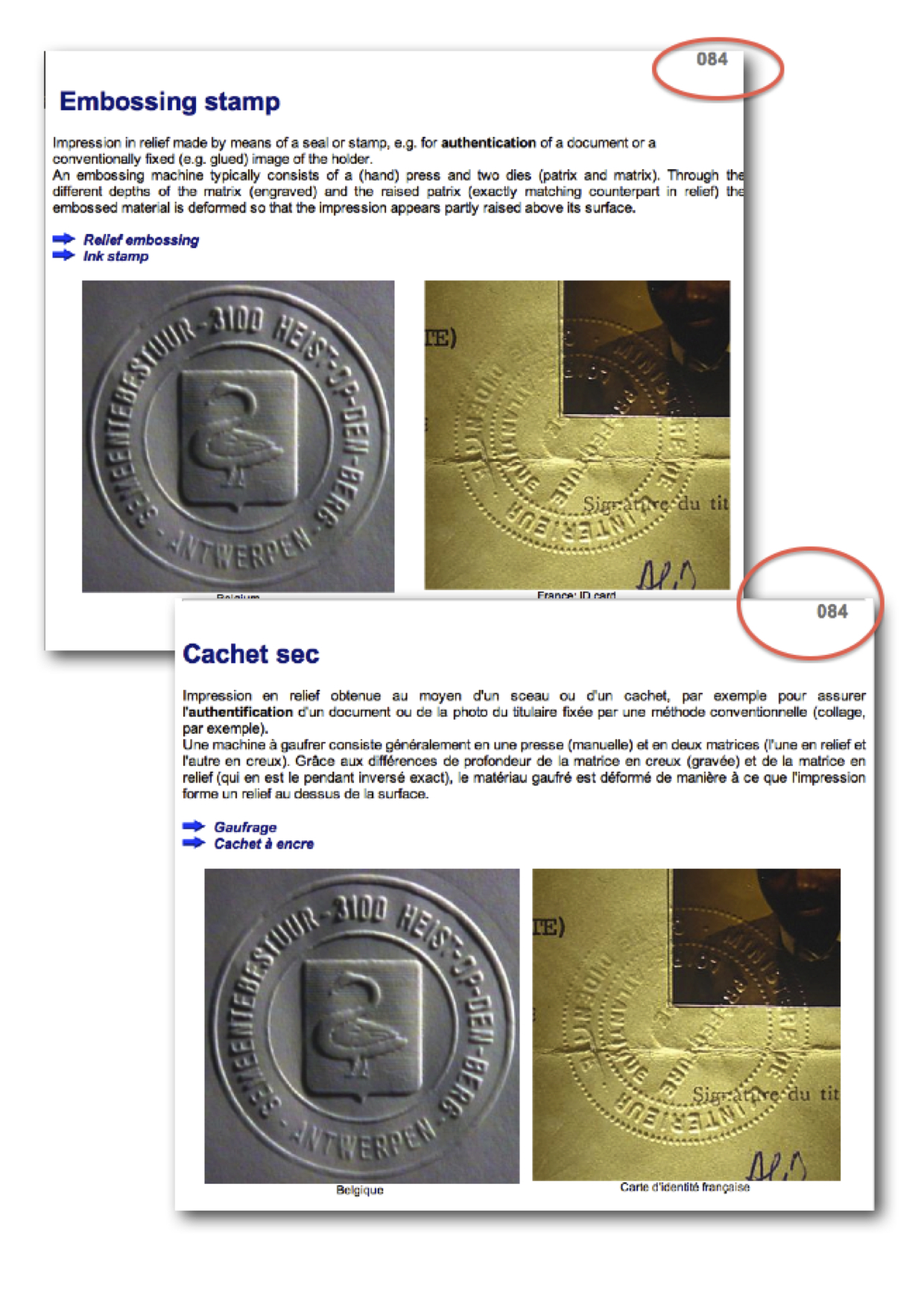 If you work with official and/or secure documents or with descriptions of how those documents are produced, you might be interested in this glossary published by the Council of the European Union (Consilium).
Corporate finance glossary
 I recently came across a very comprehensive glossary on treasury, risk and corporate finance, published on the Association of Corporate Treasurers (ACT) website. ACT is based in the City of London, and is a professional body defining standards, promoting best practice, and supporting continuing professional development.
The glossary in monolingual (English only), but covers a wide range of terms, and is well cross-referenced. You can find it here: http://www.treasurers.org/glossary
 If you work in the financial field, you might also be interested in this post about a forthcoming workshop in London, and this post about credit default swaps.


You must be logged in to post a comment.