Britain’s ancient statute book

This week a report produced jointly by the Law Commission for England & Wales (LCEW) and the Scottish Law Commission recommends repealing more than 800 pieces of legislation dating from the 14th century onwards in order, according to LCEW chairman Sir James Munby,  “to simplify and modernise our law, making it more intelligible. It saves time and costs for lawyers and others who need to know what the law actually is, and makes it easier for citizens to access justice. We are committed to ridding the statute book of meaningless provisions from days gone by and making sure our laws are relevant to the modern world.”

Here’s where the fun starts, though – some of those laws include:

Continue reading

What exactly is a lawyer-linguist?

This post is the second in a series I have called “What exactly is…”, the first of which examined the burgeoning subject of forensic linguistics.

The topic of lawyer-linguists has been interesting me for quite some time now, and popped up again recently on Twitter with a flurry of job offers from the European Central Bank for several languages.

Although this job title seems to be relatively new, you can see a very early lawyer-linguist on the right – Cicero…

Continue reading

Termium® becomes quadrilingual and has a special legal section

After first using Termium®, the Government of Canada’s terminology and linguistic databank, when it came on a CD-ROM (anybody else remember that?), I now consult the online version from time to time.

Termium® has become quadrilingual (English, French, Spanish and Portuguese), although as yet only 18,000 words are available in Portuguese.

Continue reading

Interpretation versus translation at the US Supreme Court

I think that most people reading this will agree that interpretation (or interpreting) is not the same as translation. However, outside the strict circle of the profession, the difference is not so well known.

Today we shall see how this distinction is causing a real furore!

The US Supreme Court is currently deliberating over whether costs of translation differ from costs of interpretation, in a case involving a Japanese man. Indeed the transcript of last Tuesday’s session goes into great detail. It’s 63 pages long (perhaps demonstrating the complexity of the issues involved), but well worth reading if the issue piques your interest.

Continue reading

What exactly is forensic linguistics?

This post tries to collect together a few definitions of a subject that is in the news more and more often – forensic linguistics.

The 2010 publication The Routledge Handbook of Forensic Linguistics states, in its introduction: “Forensic Linguistics is the study of language and the law, covering topics from legal language and courtroom discourse to plagiarism. It also concerns the applied (forensic) linguist who is involved in providing evidence, as an expert, for the defence and prosecution, in areas as diverse as blackmail, trademarks and warning labels.

Continue reading

Reporting from Geneva

Today, dear readers, I am reporting back from the United Nations Office at Geneva, Switzerland, where I attended the CIUTI International Standing Conference of University Institutes of Translating and Interpreting.

First of all, I have to say that I was delighted to see that several presentations specifically talked about “building bridges”. So it seems that this blog is up with the trends!!! Continue reading

A selection of useful iPad apps

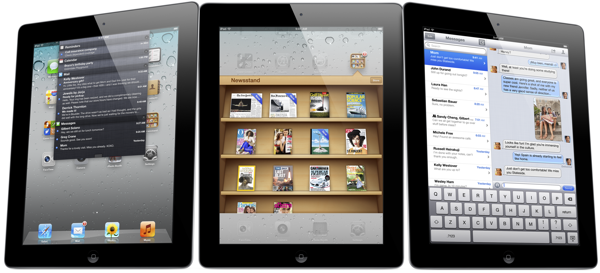
The rise of iPad adoption by legal professionals (see this article and this survey) is largely because it is so light and easy to carry around. The tablet can also be a useful way for translators to store and access a wide selection of documentary resources, including (heavy!) dictionaries offline wherever they are. In the academic world, uptake seems more limited for the moment, but there is a wealth of tools that researchers could take advantage of, as you will see below.

Hopefully this post will give you a few new ideas. I have included only those apps that I find really useful, but of course there are many more, including in other languages. Do share your favourites with us by adding a comment below this post or sending me an email. Continue reading

Collaboration or exploitation?

Something rather controversial for you today. The video presentation below discusses book digitization, use of crowd resources, and translation by non-professionals concurrently with language learning.

I think that the lawyers reading this will have plenty to say about various legal issues here, not to mention translators’ opinions.
Continue reading

Legal history, fish, olive oil and a call for papers

This post has a historical flavour, although it’s always surprising how much from the past is still relevant today…

Call for PapersRoman Legal Tradition. The Editor and Board of Roman Legal Tradition welcome submissions for the forthcoming issue. Roman Legal Tradition is a peer-reviewed journal dedicated to the civilian tradition in ancient, medieval, and modern law. It is published by the Ames Foundation at the Harvard Law School and the University of Glasgow School of Law.

You may also enjoy this article in the latest issue: In Dubious Battle: An Economic Analysis of Emperor Hadrian’s Fish and Olive Oil Laws by Morris Silver. Plus ça change… (or should I say semper eadem…)

Update on N-grams

For those who were interested in yesterday’s post, this dynamic presentation by two Harvard researchers offers a further insight into the subject (and a few smiles too): What we learned from 5 million books

The video is part of the TED project, “a community welcoming people from every discipline and culture who seek a deeper understanding of the world“. The website has a mine of interesting videos, and many have been subtitled as part of the Open Translation Project – a fascinating way to gain experience for new translators.

You may also be interested in the original post here.