Translating through the fog

The other day I came across this nice clean web-based tool which calculates the Gunning Fog readability score for a piece of text. Just for fun, I put a few sentences from a translation I was then doing (on VAT legislation!) into the tool. It came up with scores ranging between 23 and 29.4 depending on the sentences I chose.

Gunning Fog is not the only readability indicator – others include Flesch-Kincaid, SMOG (Simple Measure of Gobbledygook), and Coleman-Liau.  A comprehensive article by Ronald & Ruth Reck describes a number of them in detail. There are also lots of simple online tools available.

Continue reading

New Zealand legislation website improved

Two weeks ago, the New Zealand Legislation website got a new look, with faster, simpler ways to find and view legislation. It’s really easy to use and search.

Try it out here: http://www.legislation.govt.nz

The website provides Acts, Bills, Supplementary Order Papers, and Statutory Regulations, and links to Deemed Regulations. It is owned and updated by the Parliamentary Counsel Office.

Continue reading

Conference – Forensic Linguistics, Oporto, Portugal

The Faculty of Arts/Faculty of Law of the University of Porto (Porto, Portugal) will host the 3rd European Conference of the International Association of Forensic Linguists on the theme of Forensic Linguistics: Bridging the Gap(s) between Language and the Law.

The conference, which is organised jointly by the two Faculties, aims to bridge the gap(s) between language and the law by sharing the latest research in the field of forensic linguistics/language and the law, and will be held from 15 to 18 October 2012.

Continue reading

Monday smiles – Sea-ing double

This is actually a key case from English contract law – but at the same time almost unbelievable. Apologies to any readers who know all about the case already.

It is the story of two ships with identical names, doing an identical voyage, carrying identical cargoes. One the parties involved is even called Raffles (for those who don’t know him, there was a ‘gentleman thief’ character of the same name, created by a relative of Conan Doyle).

Suspend your disbelief for a moment, and read on…

Continue reading

Zen and working methods

A very interesting article in the Law Society Gazette last week about flexible working patterns grabbed my attention. Here is a taster: “The term ‘work/life balance’ has such negative connotations in private practice that some firms have banned it from their vocabulary.” The article deals particularly with the problems female lawyers have, but not only – it also talks about flexibility enabling men to pursue parallel careers as well, “such as writing a book or singing in a choir”.

Translators, on the other hand, rather than having the problem of getting out of the office, sometimes have a problem with staying at home too much. A great post over at Patenttranslator’s Blog – “Translator’s Dementia (TD) – What it is and How to recognize the Signs” includes a lovely description of the typical “home office” :). Jill Sommer, on the other hand, gave some really good advice for those who work at home in her 2009 post “Establishing a work-life balance and overcoming loneliness“.

So, following in the estimable footsteps above, here’s my seven-point guide.

Continue reading

Thousands of contracts from SEC filings

OneCLE Inc. is a State Bar of California-approved Minimum Continuing Legal Education (MCLE) provider. The owner used to be a senior executive at FindLaw. The OneCLE website makes available a host of contracts in English that have been filed with the US Securities and Exchange Commission, neatly classified into 282 categories including, but not limited to 😉

  • manufacturing
  • asset purchase
  • indemnification
  • registration rights
  • distribution
  • bankruptcy
  • leases from various States.

Continue reading

When we are asked to translate useless materials…

A thought-provoking guest post today from Tony Rosado, of Rosado Professional Solutions in Chicago. Tony has been a freelance conference interpreter for almost 30 years and is Federally, Colorado, and New Mexico certified. He also qualified as an attorney from the Escuela Libre de Derecho in Mexico City. You may also be interested in his English/Spanish blog.

Over to you, Tony!

Continue reading

Lawyers’ flash mob in green t-shirts

To celebrate the 30th anniversary of the Canadian Charter of Rights and Freedoms a couple of weeks ago, lawyers and other members of the legal community in Ottawa organized a flash mob and danced a choreographed piece wearing bright green t-shirts.

Other flash mobs were organized all over Canada by the Canadian Bar Association. If you want to learn the dance routine, click and enjoy. 🙂

You can read more about the event here.

Who says the legal profession is stuffy?

.

By the way, here is the Wordnik definition of ‘flash mob’, just in case you need it: http://www.wordnik.com/words/flashmob

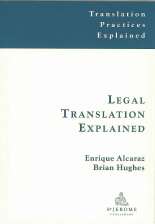
Legal Translation Explained

A few days ago I realized that I hadn’t included a book review for quite a while. Although this book was published in 2002, it is still really useful, and as far as I can tell, about the only one on the market to be such a comprehensive theoretical reference whilst being totally accessible and clearly written. When I read it, I gobbled it down in just a couple of days. It covers English, Spanish, French and German, but would probably also be of use to people working from other languages into English.

This is what the publisher, St Jerome, has to say: “The scope of the book makes it useful not only for would-be translators, but also as a reference source to anyone with a background in any of the languages used in the book, who would find the explanations and glossed terminology an aid to becoming familiar with the English legal system and vocabulary. It could also serve as a basic introductory text to anyone with an interest in legal English. (Lucy Cox, International Journal of Legal Information)

Here is a link to the publisher’s contents page so you can see whether it might be of use to you.

‘Business-ese’ may be worse than legalese

I don’t fully agree with plain language campaigns as regards legal documents – I guess I go along with those who say that the law has to be precise enough and should be interpreted by experts – i.e. lawyers and the judiciary rather than non-specialists – but I certainly think that a lot can be (and is being) done to make legal language more accessible where possible.

Continue reading