Reminder: English legal terminology webinars

Just a reminder of my previous post – eCPD Webinars are presenting a series of five 1-hour webinars in June and July, on legal terminology in England and Wales. Of course, being webinars, they can be accessed from anywhere in the world, and if you’re not free at the time of the webinar, you can watch the recording later on.

The speaker is David Hutchins of Lexacom, who teaches law and terminology at face-to-face workshops and seminars, both to translators, and to lawyers from civil code systems who are less familiar with common law.

Webinar 1, 26 June: Contracts and Contract Formation for Legal Translators
Webinars 2 & 3, 28 June: The English Legal System for Legal Interpreters and Translators
Webinars 4 & 5, 3 July: Criminal Law and Procedure for Legal Interpreters and Translators

Continue reading

Call for volunteers – the China Guiding Cases Project

Stanford Law School is making a call for volunteers who can read Chinese. I have reproduced the details below (with permission). Apply by 30 June to work with the CGCP over the coming year! It’s an excellent opportunity to gain experience, and with two highly prestigious institutions (Stanford and Monterey). Even if you are not personally concerned, please pass this post on to those you know who might fit the profiles. Thank you! 🙂

Spanish bailout conditions impenetrable behind a thicket of legalese (or not)

As readers know, I do like a bit of legalese 🙂 – see recent posts on whether Business-ese is worse than legalese, and Translating through the fog.

Today, hot off the presses of Reuters and the UK’s New Statesman, questions are being raised about the legal conditions governing the ranking of Spain’s creditors, citing part (Section 2.19, (b), (i), (B)) of the Credit Derivatives Definitions issued by the International Swaps and Derivatives Association (ISDA).

The following paragraph is being used as an example of impenetrable legal theory. You will notice liberal use of acronyms in the above articles (one of my favourite things… see here):

  • CDS – credit default swaps
  • EFSF – European Financial Stability Facility
  • ESM – European Stability Mechanism

Monday smiles – Appropriate shoes

From 2009, a wonderful motion about a lawyer using shoes with holes in the soles to convince the jury that he is a “humble and simple” man and so frugal that he has to wear old shoes. He also apparently stands with his foot “crossed casually beside the other so that the holes (…) are readily apparent to the jury”.

Less amusingly, the media coverage of the shoe incident actually led to a mistrial verdict.

Continue reading

Translation of ancient Chinese legal texts ‘as important as the Dead Sea Scrolls’

The University of California Santa Barbara has issued the following press release:

UCSB History Scholar Translates and Interprets Ancient Chinese Legal Texts

In an ancient tomb in China’s Hubei Province, archeologists discovered a basket of medical, mathematical, and legal texts that date back to the late third and early second centuries B.C. A historian at UC Santa Barbara is working to translate and interpret the legal texts, of which there are two, and describes them as “a gold mine of social and legal history.”

Continue reading

Taniguchi case outcome – A good or a bad thing for justice?

Following on from my February post about the US Supreme Court case differentiating translation costs and interpretation costs, today we have a second thought-provoking guest post from Tony Rosado (see his earlier post here). In addition to discussing the outcome of the case, he also gives some very good advice on how to deal with its aftermath.

Tony has been a freelance conference interpreter for almost 30 years and is Federally, Colorado, and New Mexico certified. He also qualified as an attorney from the Escuela Libre de Derecho in Mexico City. You may also be interested in his English/Spanish blog. Tony runs Rosado Professional Solutions in Chicago.

“After watching many of our colleagues celebrating because the U.S. Supreme Court reaffirmed the definition of an interpreter in the Taniguchi case, and more importantly, after reviewing the briefs, oral arguments, full written decision, and the dissenting opinion by Justice Ginsburg, I wonder if this decision should be cause for joy or grounds for concern.

Continue reading

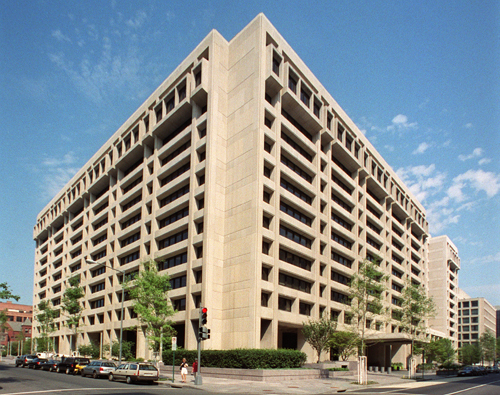
International Monetary Fund glossary updated

In the current climate, more and more cases are involving financial terms, so I thought you might be interested in this – the official IMF glossary was updated last month.

It contains more than 150,000 terms – “words, phrases, and institutional titles commonly encountered in IMF documents in areas such as money and banking, public finance, balance of payments, and economic growth. A number of entries include a usage field within square brackets, denoting the origin of the term – e.g. [OECD], or a context – e.g. [trade]; others contain a cross reference to related records. Acronyms are also included.”.

Continue reading

Proceedings of the Old Bailey 1674-1913

In a historical vein today, I wanted to tell you about a way to discover English criminal law through the ages. Fascinating.

The Old Bailey Proceedings Online makes available a fully searchable, digitised collection of all surviving editions of the proceedings of the Central Criminal Court in London, known as the Old Bailey, from 1674 to 1913, and of the Ordinary of Newgate’s Accounts (accounts of prisoners’ last speeches) between 1676 and 1772. It allows access to over 197,000 trials and biographical details of approximately 2,500 men and women executed at Tyburn, free of charge for non-commercial use.

Continue reading

Council of Europe French-English Legal Dictionary

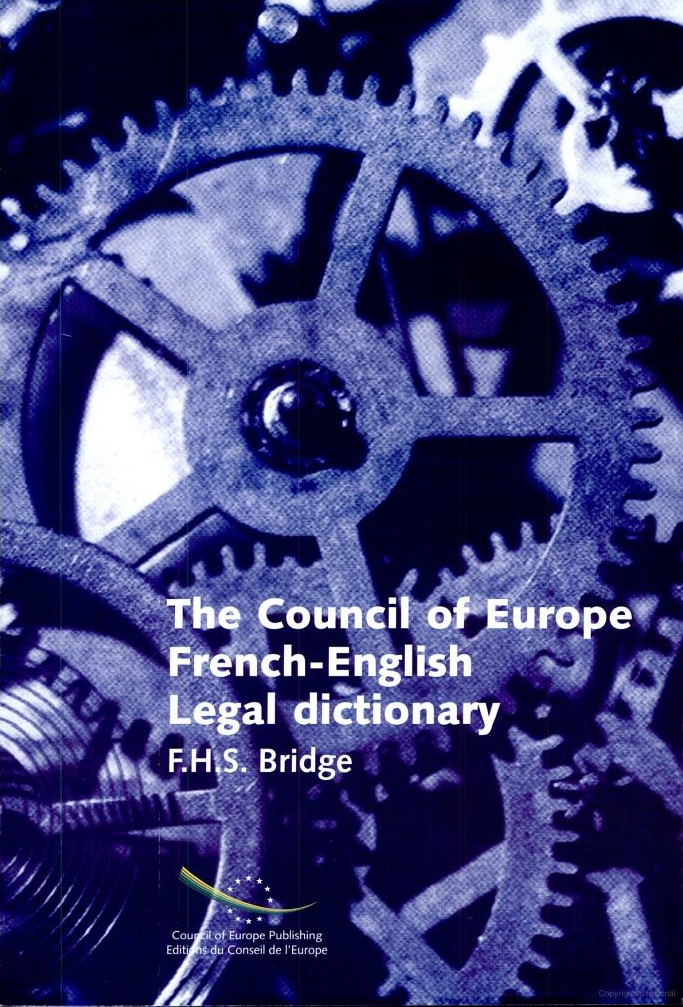
For anyone who has recently starting working in the language pair French to English, or those who might not already have heard of it, the Council of Europe French-English Legal dictionary by F.H.S. Bridge, published in 1998, is a well-known and highly regarded resource.

The dictionary contains some 11,000 entries. One of the best things about it from my point of view is the layout – most words are given as a kind of heading showing words below that often collocate with it, as you can see from the image below – just click to enlarge.

Continue reading