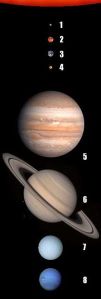
 According to the Legal Post, the most-read Canadian court decision of 2012 is Langevin, 2012 QCCS 613 (CanLII). A claimant calling himself Sylvio Langevin (who has filed various claims under other names) claimed ownership of the planet Earth, as well as, in a separate application, the planets Mercury, Venus, Jupiter, Saturn and Uranus, in addition to the four largest moons of Jupiter.
Mr Langevin apparently “saw a unique opportunity in the planets“, and reportedly “thought he could start a collection, like other people collect hockey cards“. Since the five planets and four moons are “errant” the claimant was certain that the planets currently had no legal owner.

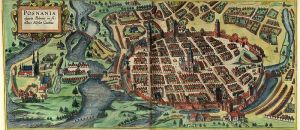 The Institute of Linguistics at Adam Mickiewicz University is to hold the Eighth Conference on Legal Translation and Legal Linguistics. The aim is to provide a forum for discussion in those scientific fields where linguistic and legal interests converge, and to facilitate integration between linguists, computer scientists and lawyers from all around the world.
 Following
 … according to the President of the Quebec Bar Association, on the occasion of the formal swearing-in ceremony of the newest judge at Supreme Court of Canada. The head of the bar declared “it is essential” that high court judges be drawn from the ranks of the best legal minds who “master” both official languages “given Canada’s linguistic diversity.”
 The Third International Conference on Law, Translation and Culture (LTC3), organized by Zhejiang Sci-Tech University, is to be held in Hangzhou, China from 31 May to 2 June 2013.
 “What is this legislative creature?” With thanks to Library Boy, let’s find out!
 Very best wishes to all readers from all over the world. Thanks to statistics from WordPress, I can see that the blog has been read by people from the countries below. Humbling indeed!
 From Words to Deeds: translation & the law
You must be logged in to post a comment.