N-Lex – Gateway to national law

Another post on the subject of national law. I just had to share this with you. N-Lex is a fairly well hidden cousin of the familiar EUR-Lex database that many of us probably use several times a day/week.

http://eur-lex.europa.eu/n-lex/index_en.htm

For 23 European countries (just hover over the list in the left-hand column), it gives you a description of each national database (“About…“) and then a direct link to go there (“Go to…“). For some countries the legislation is even in more than one language. Great to have all those links in one place!

You might also like to see my other post today about the EuroVoc thesaurus.

Two great legal thesauri

First off, the Multilingual Thesaurus of the European Union, EuroVoc, has been upgraded. Available in 24 languages, it doesn’t work quite like other thesauri, but I think it’s a really good way to think around a topic, or find out about it. You can browse the subjects (“Browse the subject-oriented version“), which include Community and national fields, “with a certain emphasis on parliamentary activities” – from law to trade, finance, agriculture and so on.

Continue reading

UK legislation 1267-present, online

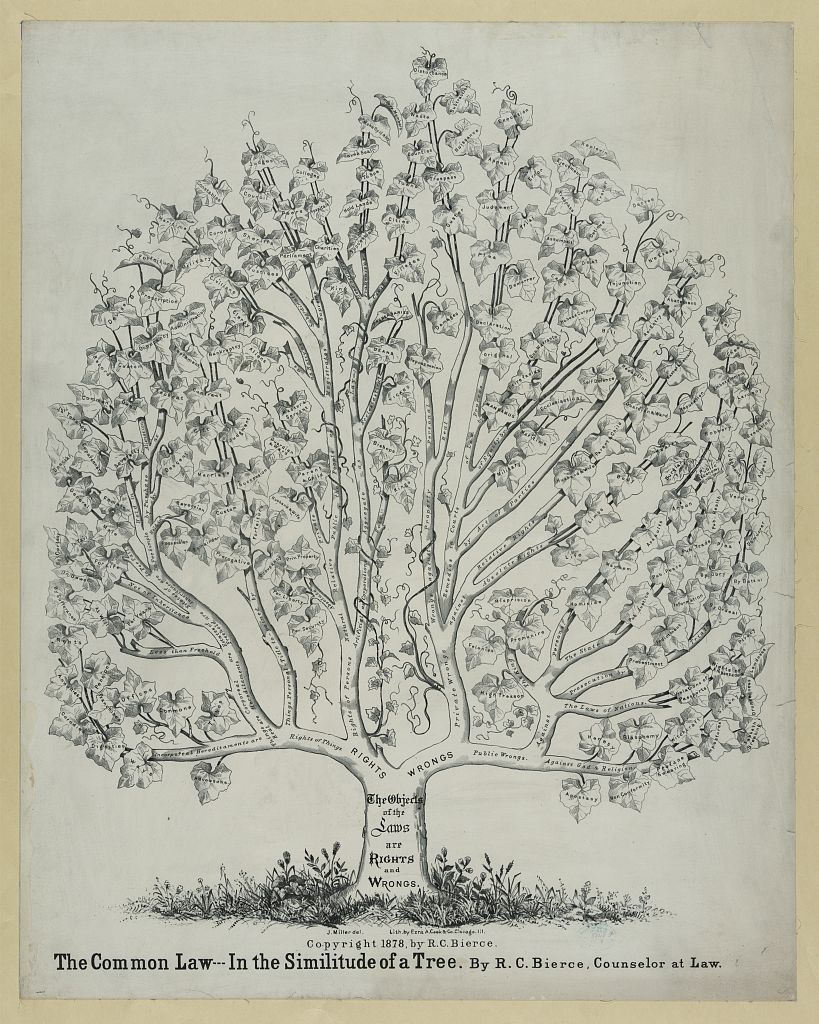
To add to recent posts on access to national legislation, here is the UK: http://www.legislation.gov.uk/. Do click to enlarge the picture on the right – a beautiful depiction of Common Law (in my opinion) from the Law Library of Congress archives.

Most types of primary legislation (e.g. Acts, Measures, N.I. Orders in Council) are held in ‘revised’ form:

Continue reading

Monday smiles – I give you this orange

Everyday phrase:
“I give you this orange.”

Legal translation:
Know all the persons by these presents that I hereby give, grant, bargain, sell, release, convey, transfer, and quitclaim all my right, title, interest, benefit, and use whatever in, of, and concerning this chattel, known as an orange, or Citrus orantium, together with all the appurtenances thereto of skin, pulp, pip, rind, seeds, and juice, to have and to hold the said orange together with its skin, pulp, pip, rind, seeds, and juice, for his own use and behoof, to himself and his heirs, in fee simple forever, free from all liens, encumbrances, easements, limitations, restraints, or conditions whatsoever, any and all prior deeds, transfers, or other documents whatsoever, now or anywhere made, to the contrary notwithstanding, with full power to bite, cut, suck, or otherwise eat the said orange or to give away the same, with or without its skin, pulp, pip, rind, seeds, or juice.

Author: Unknown. Apologies to all who those already know of this little text. 

ATA webinar – Translating civil procedure from Spanish into English

I just came across this very interesting webinar organized by the American Translators Association (ATA) – and thought you might be interested.

You can register online here, and if you miss it, a recording of the webinar can be purchased after the event.

Here is their description:

In this 60-minute webinar, attorney and translator Tom West will examine the terminology of a civil lawsuit in Mexico and compare it with the terms used in the U.S. and other Spanish-speaking countries. The presentation will cover the framework of civil procedure including the pre-filing stage, pleadings, evidence (pruebas), types of judgments (sentencias), and appeals (recursos). Typical phrases used in filings and how to translate them will be included in the webinar discussion.

Continue reading

Reporting from Caserta – Part 2

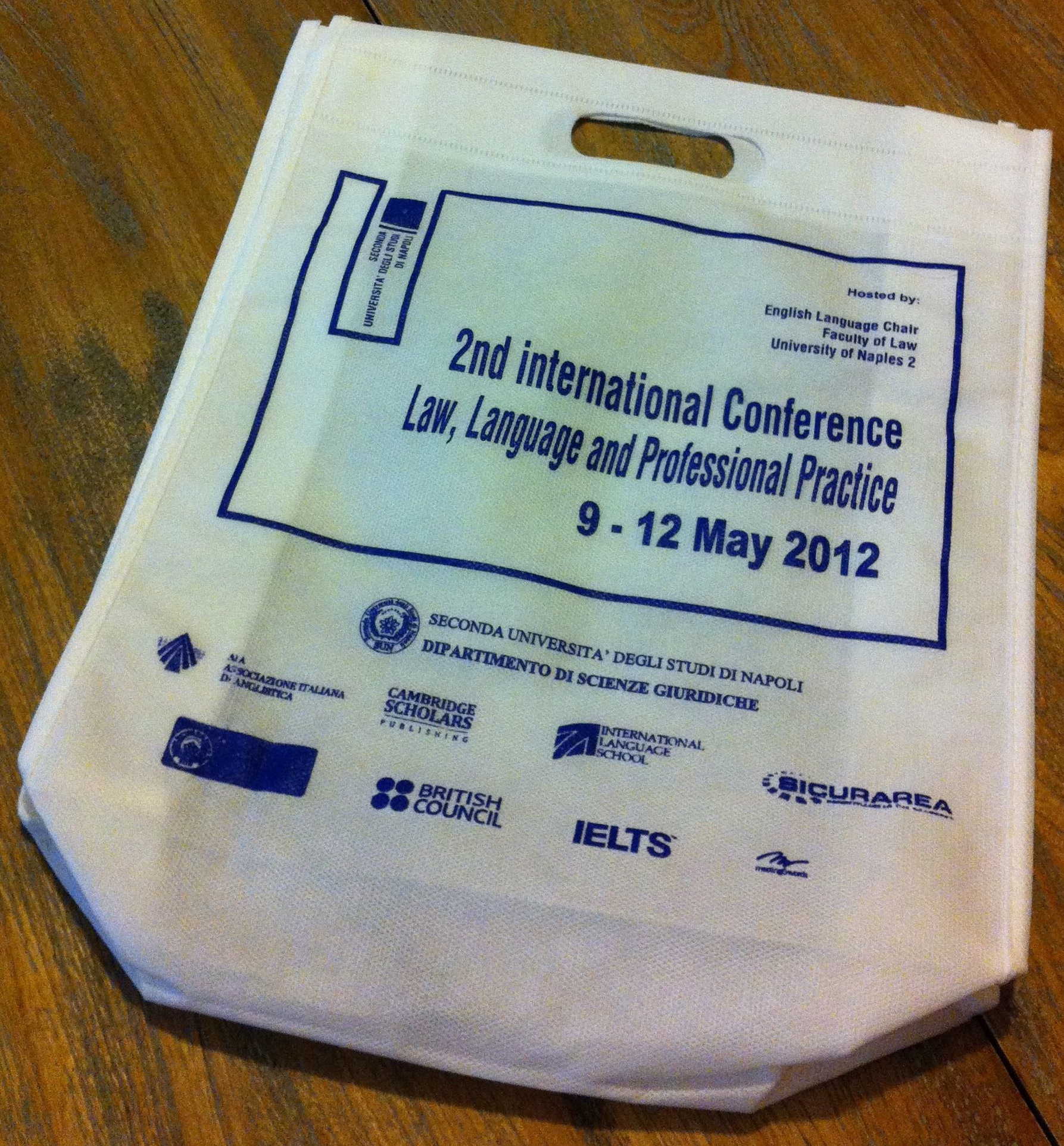
This second post includes a further selection of papers from the conference Law, Language and Professional Practice held in Caserta last week. Apologies to all those whose presentations have not been included here – there were two or three parallel sessions at the conference, and it was impossible to attend all of them. However, the full book of abstracts can be downloaded.

Continue reading

Reporting from Caserta – Part 1

Today, dear readers, I offer you a report from the conference “Law, Language and Professional Practice“, held last week in Caserta, near Naples, Italy, and attended by delegates from every continent. The book of abstracts can be downloaded from the conference website.

I have made a subjective selection of presentations, aiming to give you an idea of the wide range of topics covered. The conference was attended by scholars, advocates, translators, interpreters, teachers of legal language, and government officials, amongst others.

Continue reading

Translating through the fog

The other day I came across this nice clean web-based tool which calculates the Gunning Fog readability score for a piece of text. Just for fun, I put a few sentences from a translation I was then doing (on VAT legislation!) into the tool. It came up with scores ranging between 23 and 29.4 depending on the sentences I chose.

Gunning Fog is not the only readability indicator – others include Flesch-Kincaid, SMOG (Simple Measure of Gobbledygook), and Coleman-Liau.  A comprehensive article by Ronald & Ruth Reck describes a number of them in detail. There are also lots of simple online tools available.

Continue reading

New Zealand legislation website improved

Two weeks ago, the New Zealand Legislation website got a new look, with faster, simpler ways to find and view legislation. It’s really easy to use and search.

Try it out here: http://www.legislation.govt.nz

The website provides Acts, Bills, Supplementary Order Papers, and Statutory Regulations, and links to Deemed Regulations. It is owned and updated by the Parliamentary Counsel Office.

Continue reading

Conference – Forensic Linguistics, Oporto, Portugal

The Faculty of Arts/Faculty of Law of the University of Porto (Porto, Portugal) will host the 3rd European Conference of the International Association of Forensic Linguists on the theme of Forensic Linguistics: Bridging the Gap(s) between Language and the Law.

The conference, which is organised jointly by the two Faculties, aims to bridge the gap(s) between language and the law by sharing the latest research in the field of forensic linguistics/language and the law, and will be held from 15 to 18 October 2012.

Continue reading