 Now I know that some readers have reservations about Proz.com, but in the interests of the dissemination of information…
Proz.com is organizing a virtual event for lawyer-linguists entitled “A Meeting of Minds”.
Now I know that some readers have reservations about Proz.com, but in the interests of the dissemination of information…
Proz.com is organizing a virtual event for lawyer-linguists entitled “A Meeting of Minds”.
 It is my great pleasure to introduce a guest report on the Sixth Summer Institute of Jurilinguistics held at the end of August, written by Jean Leclercq, co-author of the erudite and multifaceted blog Le mot juste en anglais.
Leclercq trained both in literature and the law, and worked as a translator, from English and Spanish to French, at the headquarters of the World Health Organization in Geneva for 26 years. Retirement hasn’t stopped him translating, often on a voluntary basis, and keeping extremely active through various linguistic and online activities amongst others. A vous Jean !
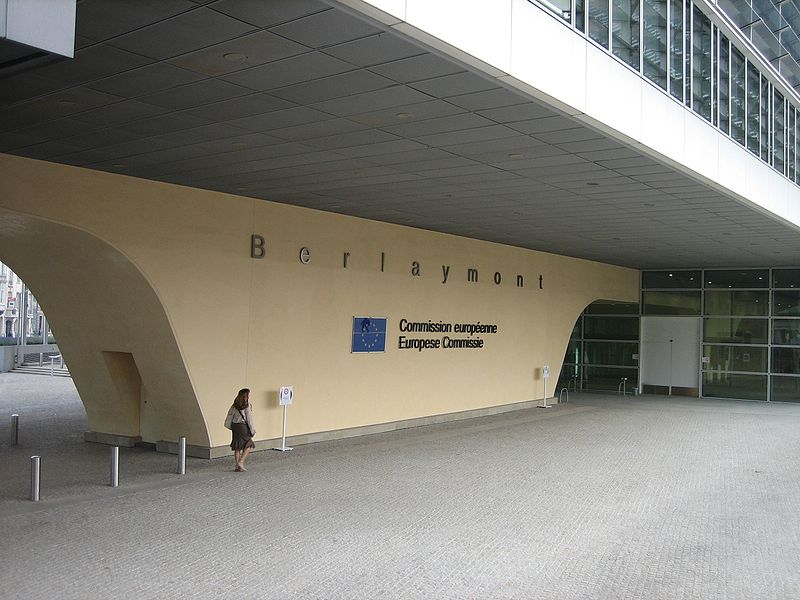 In this fourth and final part of my report from Brussels on the Translation Studies Days held on 20 & 21 September 2012, I’d like to present four projects from members of the European Master’s in Translation (EMT) research network, and the European Comparable and Parallel Corpora research group project.
 Today I offer you Part 3 of my report on the Translation Studies Days held in Brussels on 20 & 21 September 2012, looking at the three remaining studies that have been published. You can find Part 1 here, and Part 2 here. The fourth and final part, concerning the very interesting Masters and PhD projects presented, can be found here.
 Following Part 1, this post will discuss the second of the five studies on translation and related matters recently published by the Directorate-General Translation of the European Commission, presented at the Translation Studies Days held in Brussels on 20 & 21 September 2012.
 One of the main agenda items of the two Translation Studies Days held in Brussels on 20 & 21 September 2012, was the presentation of five studies recently published by the Directorate-General Translation of the European Commission.
 The National Association of Judiciary Interpreters and Translators (NAJIT) in the USA invites proposals for its 34th Annual Conference to be held in St. Louis, Missouri from 17 to 19 May 2013. Papers on all topics relevant to the profession are welcome. Submissions are to be made electronically, and the proposal form can be accessed here. The final proposal deadline is October 17, 2012.
 Early registration might be a good idea for next year’s CIUTI forum (the International Standing Conference of University Institutes of Translating and Interpreting). The 2013 event, taking place from 17-18 January, will be the 10th anniversary, so the organizers are expecting filled ranks.
If you’d like to get an idea of the content, I posted about last year’s conference here.
To find out more, visit the forum website at: http://www.ciuti.org/events/detail/ciuti-forum-2013
 RELINE legal linguistics network (see my post describing the initiative) recently held its annual seminar in Nyborg, Denmark. The title of this year’s seminar was Talking like a Lawyer – Talking with a Lawyer, and it took place immediately after a PhD course entitled Communication and Rhetoric in the Judicial Process. Attendees were warmly welcomed by the network’s initiators and seminar organizers Professor Anne Lise Kjær and Professor Jan Engberg.
The main theme of the seminar was the significant impact that communication and lawyers’ rhetoric have on the success and outcome of lawsuits and criminal trials.
In accordance with RELINE’s purpose and spirit, the seminar was a meeting-place for researchers and practitioners from different disciplines with the opportunity to exchange research results, experience, thoughts, and ideas about the relationship between law and language. Here are some summaries of certain talks that I thought might be of interest to readers.
 Professor Hannken-Illjes presented an interdisciplinary research project (involving sociologists, ethnographers, lawyers, linguists) examining the pathways of lawyers’ arguments in criminal cases from the United States, the UK, and Germany (and initially also Italy).
The German strand of the project involved an in-depth examination of 16 criminal cases. During the PhD course, we had a hands-on opportunity to examine the case file, and to draw our own conclusions about the themes to be singled out as lines of argument. In her seminar presentation, the Professor focused particularly on units of analysis (topoi, themes and/or arguments), and the failures of such themes. A key conclusion of the study was that in the German system, defense attorneys become more used to ‘thinking on their feet’ following the submission of unexpected evidence which is not permitted in many systems.
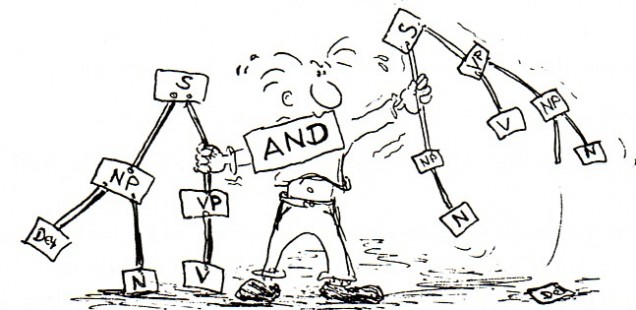 Professor Solan’s talk covered three main areas of legal interpretation – of statutes, of wills, and of contracts.
He started with differentiating three ways to interpret legal texts: a de dicto reading (of the word), de re (of the thing) and a non-specific reading.
Professor Solan gave a number of examples from case law of the above three interpretations. Regarding statues, we looked at disability legislation and bank robbery as a federal crime and saw how interpretations are wide-ranging, even “chaotic” as Solan put it. For wills, he described the situation as more “sensible” – a kind of default position. In the area of contracts, Professor Solan underlined the shift in US law from a de dicto position to that of de re, but used the word “mischief” to describe the way in which language may be ‘skewed’ by the various parties involved.
In conclusion, he underlined that in Europe a court would be extremely unlikely to ignore the purpose of a statute in order to look for “linguistic hooks” on which to hang an argument – or in other words that as regards the US, as he has said previously “it is possible to rely too much on the language itself and not enough on context to sustain a legal system with adequate moral basis“.
Prof. Lin Adrian led an excellent session to mix and match participants. Despite a light drizzle, groups of 2 and 3 people that hadn’t previously been in contact got to know each other and discussed their impressions whilst walking along the shoreline. A highly recommended way to pick up flagging energy levels in the mid-afternoon.
 Prof. Morten Rosenmeier, Professor of intellectual property law at the University of Copenhagen, chaired a session during which the different interest groups at RELINE presented their current projects.
For the Bibliography group, Ingrid Simmonæs presented a database of research articles and publications – it includes not only references but also abstracts and conclusions, enabling scholars to assess whether the whole article falls within their interests. Shortly the database will be open access to the RELINE network, enabling members to upload and comment upon entries.
We heard about the activities of the Plain language group from Anne Kjærgaard and Lene Rosenmeier (more about that tomorrow!).
The Court group is looking not only at interdisciplinary issues but also at inter-geographical ones. So far, there have been group visits to Courts, and members include both lawyers and linguists.
The Intellectual Property Rights group is looking for more members to join its ranks, so if it’s your field – go ahead!
 The seminar was held on a very beautiful island at a hotel on the seashore. You can see a few views on the right (click to enlarge).
Here are a few take-away quotes from the seminar:
.
¹ For a very visual explanation of ambiguity, see this nice blog post, involving elephants, pajamas and Groucho Marx. 🙂 For a collection of practical case examples see the paper De Re and De Dicto, by R.E. Rodes, Jr.
Following two previous posts in late August (part 1 & part 2), today I would like to end my report on the Canterbury conference “Comparative Law: Engaging Translation” with a summary of Professor Gémar’s keynote talk.
 The highly eminent Professor Gémar treated* us to “21 ways to look at translation” (both general and legal). It was a whistle-stop tour of more or less every important issue for translators and translation. These are the main points only – the full paper will be published in the conference proceedings.
 Professor Gémar concluded with some enlightening statements and citations: “to translate is to seek truth without the expectation of resolution”. “Language signs [are…] far more mysterious than atoms and stars”. “A translation, particularly a legal one, is but an approximation, if not a compromise”. “This quest for equivalence is […] for the translator, a herculean effort and task”. “How can we translate into French or Spanish (or whatever language) Mary Poppins’ supercalifragilisticexpialidocious? We shouldn’t even try!”
*and it was a real treat – if you have the opportunity to hear him speak in person, don’t miss the chance.
** The translation journal Babel
 You might also be interested to listen to a recording of Professor Gémar speaking (in French) at the University of Montreal in their conférences midi series, entitled “Traduire le droit: de la traduction juridique à la jurilinguistique – Texte(s), culture(s) et équivalence”. Click to access the video.
 From Words to Deeds: translation & the law
You must be logged in to post a comment.