Problematic terms of art used in contracts

I am delighted to present a guest post today from Kenneth A. Adams. According to the Canadian periodical The Lawyers Weekly, “In the world of contract drafting, Ken Adams is the guru.” His book A Manual of Style for Contract Drafting is widely used throughout the legal profession. He gives seminars in the U.S., Canada, and internationally, acts as a consultant and expert witness, and is a lecturer at the University of Pennsylvania Law School.

Ken’s blog contains a multitude of posts about specific terms and issues relating to contract drafting. The post below contains a number of links (terms in red) – by clicking you can find out more about each term. Over to you Ken!

*** Continue reading
Life as a rural court interpreter

Today’s guest post is by Kathleen Shelly, a Spanish/English certified court interpreter and translator working in Delaware and Maryland in the United States. It was also published last week by NAJIT (the National Association of Judiciary Interpreters and Translators), of which Kathleen is a highly respected and senior member.

Continue reading

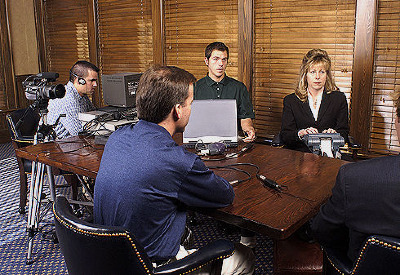
20 tips for lawyers working with interpreters

I’m sure lawyers taking depositions from deponents speaking other languages, especially when travel to foreign countries is required, are fully aware of the logistic costs involved, and wish to get the best results from interpreters working with them. This post was originally written for journalists working with interpreters, but I felt strongly that it applied so well to the legal context that it was worth sharing with you all.

Of course one or two of the items would generally not apply in a deposition context, such as giving the deponent the option to speak a language other than their own (tip n° 10), but the vast majority of the points mentioned would improve things dramatically in my experience!

Perhaps the key thing to take away is that by making the efforts below you are not ‘making the interpreter’s job easier’ but making your communication more effective, and, ultimately, getting a better result.

See what you think… 

Continue reading

Measuring how well contract attorneys speak foreign languages

Today I am delighted to introduce a surprising insight into foreign language testing for contract attorneys in the United States, by Andrea Kaluzny. As well as being a contract attorney herself, providing multilingual support for litigation, Andrea is very committed to volunteer work in several areas including, amongst others, animal welfare and human rights.

Continue reading

Colonial ruling

It is an honour for me to introduce today’s guest post, by a man who has practiced as an attorney in two languages, taught legal English at a prestigious law faculty, and had wide experience of court interpreting and depositions – Jonathan Goldberg.

He also co-authors a highly erudite and multifaceted French/English blog called Le mot juste en anglais.

Continue reading

Legal considerations – machine translation and copyright

This guest post is published under a GNU version 2 licence, and comes from the Open Translation Tools Manual (more about that in a forthcoming post). It was written by Ed Bice in 2009, with modifications by Thom Hastings also in 2009. Despite being 3 years old, I think it brings up some very interesting topics for discussion. I look forward to reading your comments!

American copyright law considers a translation a derivative work. As such translators must obtain permission from the copyright or derivative right holder of the source language text. With regard to online translation, we expect that as Machine Translation (MT) and Hybrid Distributed Translation (HDT- strategies combining human and machine translation) come of age significant changes will need to be made to the legal framework to accommodate these technologies.

Continue reading

Call for volunteers – the China Guiding Cases Project

Stanford Law School is making a call for volunteers who can read Chinese. I have reproduced the details below (with permission). Apply by 30 June to work with the CGCP over the coming year! It’s an excellent opportunity to gain experience, and with two highly prestigious institutions (Stanford and Monterey). Even if you are not personally concerned, please pass this post on to those you know who might fit the profiles. Thank you! 🙂

Taniguchi case outcome – A good or a bad thing for justice?

Following on from my February post about the US Supreme Court case differentiating translation costs and interpretation costs, today we have a second thought-provoking guest post from Tony Rosado (see his earlier post here). In addition to discussing the outcome of the case, he also gives some very good advice on how to deal with its aftermath.

Tony has been a freelance conference interpreter for almost 30 years and is Federally, Colorado, and New Mexico certified. He also qualified as an attorney from the Escuela Libre de Derecho in Mexico City. You may also be interested in his English/Spanish blog. Tony runs Rosado Professional Solutions in Chicago.

“After watching many of our colleagues celebrating because the U.S. Supreme Court reaffirmed the definition of an interpreter in the Taniguchi case, and more importantly, after reviewing the briefs, oral arguments, full written decision, and the dissenting opinion by Justice Ginsburg, I wonder if this decision should be cause for joy or grounds for concern.

Continue reading

When we are asked to translate useless materials…

A thought-provoking guest post today from Tony Rosado, of Rosado Professional Solutions in Chicago. Tony has been a freelance conference interpreter for almost 30 years and is Federally, Colorado, and New Mexico certified. He also qualified as an attorney from the Escuela Libre de Derecho in Mexico City. You may also be interested in his English/Spanish blog.

Over to you, Tony!

Continue reading

Translations as an adversarial device – Part 1

Every interpreter who has worked on a deposition will be familiar with lawyers using interpretation as a way to bargain. However, I hadn’t thought about this in the context of written translations before.

This guest post, by Dan Harris and first published at China Law Blog, started me thinking about this issue. Dan writes and speaks extensively on Chinese law.

I hope you will have lots of comments, because I think it’s a fascinating subject for discussion. I’ll be writing more about this in a  couple of weeks.

Continue reading