 Today I’d like to tell you about a tool called WeBiText, under development at the National Research Council of Canada. It is quite similar to Linguee, a review of which I posted last week – it searches a corpus and provides parallel extracts of translations. WeBiText can produce results for 30 languages, including a few unusual ones such as Inuktitut, Haitian Creole and Welsh.
Yearly Archives: 2012
CJEU rules on ‘IP translator’ as a UK trade mark
An interesting landmark case today…
 On 16 October 2009, the Chartered Institute of Patent Attorneys (CIPA) applied to register the designation ‘IP TRANSLATOR’ as a UK trade mark. To identify the services covered by that registration the CIPA used the heading of Class 41 of the Nice Classification which includes translation but is called ‘Education; providing of training; entertainment; sporting and cultural activities’.
The UK Intellectual Property Office refused the application, stating that the class description included ‘translation services’. The proposed trade mark would thus have lacked distinctive character and been descriptive in nature, too similar to the class description itself.
20 tips for lawyers working with interpreters
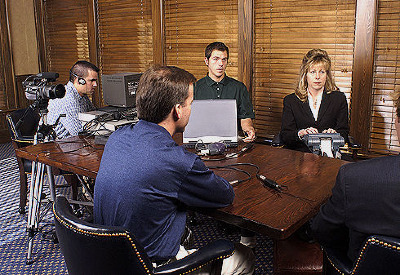 I’m sure lawyers taking depositions from deponents speaking other languages, especially when travel to foreign countries is required, are fully aware of the logistic costs involved, and wish to get the best results from interpreters working with them. This post was originally written for journalists working with interpreters, but I felt strongly that it applied so well to the legal context that it was worth sharing with you all.
Of course one or two of the items would generally not apply in a deposition context, such as giving the deponent the option to speak a language other than their own (tip n° 10), but the vast majority of the points mentioned would improve things dramatically in my experience!
Perhaps the key thing to take away is that by making the efforts below you are not ‘making the interpreter’s job easier’ but making your communication more effective, and, ultimately, getting a better result.
See what you think…
Plain language in Portugal
 I watched this excellent TEDx talk some time ago, but mentioning it to someone recently reminded me that you might be interested. As you may know through the blog, my position on plain legal language is somewhat mixed – due to concerns about precision and expert interpretation. However, I certainly do agree with improving accessibility.
Sandra Fisher-Martins runs Português Claro, a training and consultancy firm that introduced plain language in Portugal and has been helping Portuguese companies and government agencies communicate clearly since 2007.
Online volunteering with the United Nations
Surprised that you can volunteer online? Well, you can! I’ve been doing this for a number of years now, and thought I would share the information with you, because I don’t think that many people are aware that they can help out from their desktop.
 Why volunteer online?

“Volunteering online is an opportunity to support the cause of sustainable human development working from a computer anywhere in the world. Volunteers do not need to travel and have a great degree of flexibility in volunteering the hours that fit their schedule.”
Translation studies days in Brussels
 On 20 and 21 September 2012, the Directorate-General for Translation of the European Commission (DGT) will organize the second edition of its Translation Studies Days in Brussels.
At this event, representatives from academia, public translation services and the language industry will meet to discuss studies covering a wide range of topics regarding translation, multilingualism, and international legal terminology.
(Note: you can click on the poster to enlarge it.)
Measuring how well contract attorneys speak foreign languages
 Today I am delighted to introduce a surprising insight into foreign language testing for contract attorneys in the United States, by Andrea Kaluzny. As well as being a contract attorney herself, providing multilingual support for litigation, Andrea is very committed to volunteer work in several areas including, amongst others, animal welfare and human rights.
Monday smiles – Disclaimer
Today’s smile comes with kind permission from Stu’s views, law cartoons created by Maddy Dodson and Stu Rees, both of whom graduated from Harvard Law School.

Linguee – the translation search engine
 For those who might not have discovered it yet, Linguee is a web-based tool for searching previous translations.
Linguee is currently available in English<->German, English<->Spanish, English<->French, and English<->Portuguese.
According to the website, Chinese, Japanese, and other languages will follow soon.
Translation and interpreting jobs at EU – apply now!
 The European Personnel Selection Office (EPSO) has launched translator competitions for Estonian, Irish, Latvian and Portuguese. Apply by 14 August.
Competitions for English, French and Italian translators are postponed until 2013.
 From Words to Deeds: translation & the law
You must be logged in to post a comment.