…
EU Translation Workshop, London
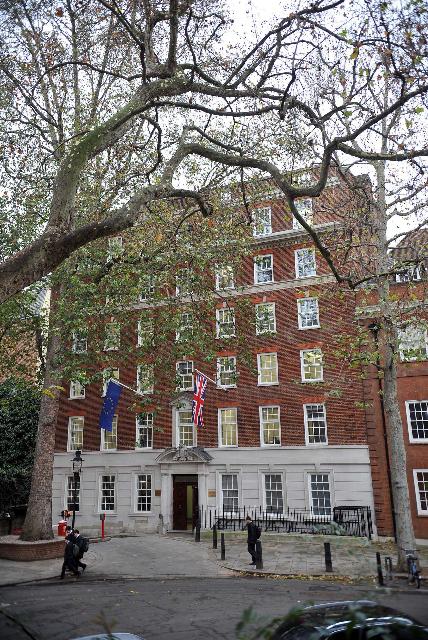 Lots of resources originating from the UK this week! Today, I’d like to make you aware of a workshop – this time ‘physical’ presence is required however!
The workshop is being organized on Friday 1 February 2013, 1.45 for 2 pm – 5.30 pm, by the London Regional Group of the ITI (Institute of Translation and Interpreting). Following previous workshops this is another opportunity to work on EU texts with John Evans, Language Liaison officer at the EU Commission in London.
Free learning resources on law
 The Open University in the UK offers OpenLearn, giving free access to some of their learning resources. You’ll find materials on a range of subjects. Try as many as you like for free. Some are ‘tasters’ of longer courses for which you need to register and pay, and some are standalone offerings. A variety of multimedia are used – some are written only, while others include audio and/or video material.
Below is just a small selection that caught my eye:
Guest post – Online training by eCPD
 As you know, this blog is non-commercial, so the following post is very much in the spirit of information sharing, and not advertising. In my opinion, there are so few training resources available (especially that are not tied down geographically!) that we must share all we can. I have posted before about eCPD here and here, but this time Lucy Brooks, the founder, is going to tell us directly about eCPD’s latest venture… Over to you Lucy!
Monday smiles – Interstellar land claims
 According to the Legal Post, the most-read Canadian court decision of 2012 is Langevin, 2012 QCCS 613 (CanLII). A claimant calling himself Sylvio Langevin (who has filed various claims under other names) claimed ownership of the planet Earth, as well as, in a separate application, the planets Mercury, Venus, Jupiter, Saturn and Uranus, in addition to the four largest moons of Jupiter.
Mr Langevin apparently “saw a unique opportunity in the planets“, and reportedly “thought he could start a collection, like other people collect hockey cards“. Since the five planets and four moons are “errant” the claimant was certain that the planets currently had no legal owner.
DNA Forensics workshop in Florida
 The Association of Translators and Interpreters of Florida (ATIF) is organizing a 4-hour workshop on January 18th [next week!] on DNA Forensics at Duval Courthouse in Jacksonville, Florida.
Conference – Legal translation & legal linguistics, Poznań, Poland
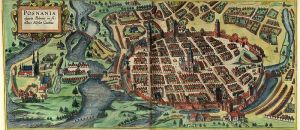 The Institute of Linguistics at Adam Mickiewicz University is to hold the Eighth Conference on Legal Translation and Legal Linguistics. The aim is to provide a forum for discussion in those scientific fields where linguistic and legal interests converge, and to facilitate integration between linguists, computer scientists and lawyers from all around the world.
The conference will be held over 3 days, from 28th June to 30th June (Friday-Sunday) 2013 in Poznań, Poland. Papers are invited on the following topics:
The Writer’s Diet test
I found this wonderful tool recently and just had to share it with you. There are several tests to evaluate how readable texts are, but the results of this one are such fun!
Helen Sword, who offers the free online tool, is a scholar, award-winning teacher, and poet who has published books and articles on modernist literature, higher education pedagogy, digital poetics, and academic writing. She received her PhD in Comparative Literature from Princeton University and now teaches in the Centre for Academic Development at the University of Auckland.
To try it out, I entered a sample of text that was used by the press a few months ago as an example of impenetrable legalese (see this post for more details). You can see the results in the screenshot below.
Monday smiles – Dogs (don’t) have to be bilingual in Montreal
 Following Friday’s post on bilingualism in Canada…
A spoof news report led to quite a few red faces in Quebec a couple of weeks ago. CBC Radio ran a story about a new City bylaw which was to require dogs to learn French and English commands, otherwise “dog parks would descend into chaos”. City employees were to be on hand to administer comprehension tests for basic commands.
The ‘new bylaw’ came in a context of disputed language laws in the province (see this post about retailers’ signs), and therefore, it seems, was considered quite plausible.
High court judges should be bilingual…
 … according to the President of the Quebec Bar Association, on the occasion of the formal swearing-in ceremony of the newest judge at Supreme Court of Canada. The head of the bar declared “it is essential” that high court judges be drawn from the ranks of the best legal minds who “master” both official languages “given Canada’s linguistic diversity.”
The recently elected Mr Justice Richard Wagner is bilingual, as was Justice Marie Deschamps, who he replaces.
Another think struck me though, in addition to the arguments about linguistic diversity – how about the argument for bilinguallism and multilingualism as a way to open the mind? 🙂
 From Words to Deeds: translation & the law
You must be logged in to post a comment.