 Today I am delighted to introduce Steven M. Kahaner, Esq., the founder and Executive Director of the legal translation agency Juriscribe, whose valuable comments some of you may have seen on this blog. Like other legal professionals that read WordstoDeeds, Steven is a lawyer who is genuinely interested in dialogue with translators and linguists. Not only that, but he is an American that builds bridges with Europe! Sorry to all those from the US out there, but you must admit that it’s not so common 😉 This is borne out, amongst other things, by his attending translation conferences (such as this one in Lisbon) and his membership in EULITA (the European Legal Interpreters and Translators Association). You can read more about Steven’s profile here.
Tax word soup
Now given that tax is a serious matter, I couldn’t really include this in a Monday smiles post, but this selection of taxes from Wordnik is both interesting from a lexical point of view (I certainly hadn’t heard of “pannage”, “piccage”, or “scutage” before!), and also quite fun (a *beard* tax?!).
You may know of or use Wordnik (I posted about it here – The dictionary on steroids) – a useful dictionary resource also including a thesaurus, examples, contexts, and even tweets.
 Here is a taster of the tax word soup, but you will find the link to the full list below. Enjoy!
- A beard tax
- A chimney tax
- The sheriff-tooth tax
- A tax on candles
You can find more taxes as well as definitions and histories on the Wordnik blog here.
Corpus-based terminology project – participants needed!
 I am looking for professional legal translators (whether new in the career or experienced) to trial a new methodology on terminology called NIFTY. Participation includes a free training pack (15-minute video and handbook), in return for some feedback in the shape of two fast and easy to complete online forms.
The NIFTY methodology involves using specialized electronic corpora (collections of texts), compiled by translators themselves, to find appropriate terms in the target language, in particular types of text (just as an example – joint venture agreements, offering circulars, divorce decrees – but it could be any category you like).
The NIFTY methodology applies to all language pairs, and results of participation will be anonymized. It has also been developed to take as little time as possible (on average 30 minutes in the pilot study), so as to be useful to working translators.
If you are interested in participating, please contact me at nifty28@protrads[dot]com.
Monday smiles – Peter Piper
Here we are again for another in our occasional series of nursery rhymes (see Roses are Red, and Jack and Jill).
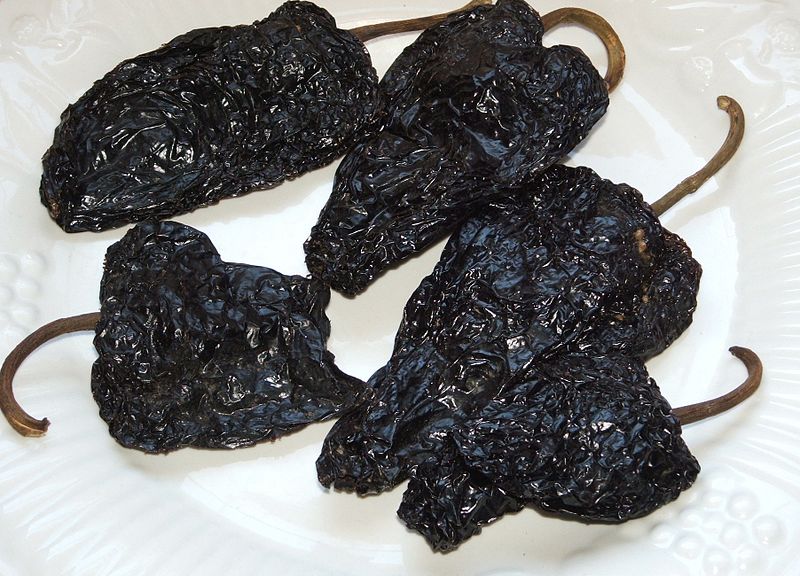
Peter Piper picked a peck of pickled peppers
A peck of pickled peppers Peter Piper picked
If Peter Piper picked a peck of pickled peppers
Where’s the peck of pickled peppers Peter Piper picked?
.
“Peter Piper”
 Cross examination by Counsel for the prosecution:
Obviously self-explanatory.
.
.
.
.
Credit: from the wonderful book The Legal Guide to Mother Goose, translated by Don Sandburg, published by Price/Stern/Sloan, Los Angeles, 1979
Corpus-based collocation dictionaries in 230 languages
I posted early last year about the fantastic resource offered by Projekt Deutscher Wortschatz at Leipzig University’s Department of Computer Science – the number of languages has now increased to 230!
Guest post – Red T
I am honoured to welcome a guest post from Maya Hess, the founder of Red T, a non-profit organization dedicated to the protection of translators and interpreters (T&Is) in conflict zones and other adversarial settings. Comprising a team of volunteers, Red T advocates worldwide on behalf of linguists at risk, raises awareness of their plight and promotes their safety. Below is an interview that is reprinted with permission from GALA (Globalization and Localization Association).
* * *
Bijural terminology records
This is a great resource for translators working with French and English – the Canadian Department of Justice has published individual factsheets or “records” for terms that have been the subject of legislative harmonization between the common law and civil law systems. The records include many legal concepts (one of the trickiest things to translate 😉 ) so I think it’s really useful.
Monday smiles – Branding law firms as chocolate bars
 Since in some parts of the world readers will have been munching on chocolate this weekend, I thought you might be interested in this article published by the UK’s Law Society Gazette. It isn’t strictly speaking a Monday smile, because there is a serious side to the article – it discusses the need for law firms to make it easier for clients to differentiate between their services, and the fact that firms are not well known to the general public.
But I just loved… “Berwin Leighton Paisner was compared to Hotel Chocolat as the firm is top of the range“, and “Olswang was a bag of Minstrels due to its expertise in entertainment and Ince & Co was a bag of Mars fun-size – not too demanding, but big enough to have fun.”
Court interpreting for migrant community needs in Maine, USA – a focused approach
This guest post by Judy Harrison, courts reporter, is published with kind permission from the Bangor Daily News*. It discusses interpretation for migrants – in languages where professional, qualified interpreters are often not available. I had an interesting discussion about this issue with a person working in international civil rights and methods of training for those speaking rare languages. I’d love to hear your opinions!
* * *
Conference – Law Via the Internet, Jersey
 The 2013 Law Via the Internet Conference will take place on the island of Jersey, Channel Islands, from 26-27 September 2013. The theme of this year’s Conference is ‘Free Access to Law in a Changing World’.
It is 11 years since the Declaration on Free Access to Law was signed at Montreal and the Free Access to Law Movement (FALM) was founded. Since then the movement has grown to include organisations from more than 50 countries and recent Law Via the Internet conferences have been held in Africa, Asia and North America.
 From Words to Deeds: translation & the law
You must be logged in to post a comment.